



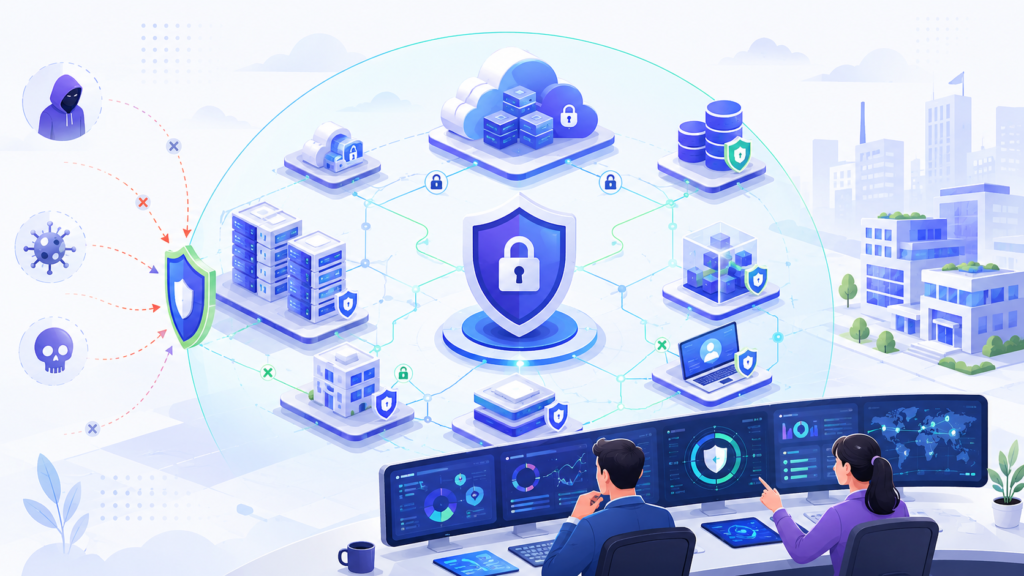
As businesses become increasingly connected, cyber security has evolved from an IT responsibility into a critical business priority. Organizations today manage sensitive customer information, business data, cloud environments, and digital operations that require continuous protection against evolving threats.
Modern cyber threats are becoming more sophisticated, targeting businesses through phishing, unauthorized access, infrastructure vulnerabilities, and operational disruptions. Companies that proactively strengthen security frameworks reduce business risk and improve customer confidence.
This article explains how businesses can build stronger security strategies and protect their digital infrastructure.
Security Must Be Integrated Across the Entire Business
Effective cyber security is not limited to software or hardware—it requires a comprehensive approach involving people, processes, and technology.
Organizations that adopt preventive security measures create more resilient digital environments.
Core security practices:
- Multi-factor authentication
- Identity and access management
- Endpoint protection
- Secure infrastructure policies
- Continuous security updates
- Proactive Monitoring Reduces Business Risk
Businesses can no longer rely only on reacting after incidents occur. Continuous monitoring and early threat detection have become essential for minimizing operational disruption.
Real-time visibility allows organizations to respond quickly and maintain service reliability.
Modern monitoring capabilities:
- Infrastructure monitoring
- Threat detection systems
- Automated alerting
- Security analytics
- Incident response planning
- Creating Long-Term Security Resilience
Cyber security should support business growth rather than slow it down. Organizations need flexible security frameworks that scale alongside digital transformation initiatives.
Building resilience ensures long-term operational continuity and customer trust.
Long-term security priorities:
- Employee security awareness
- Cloud security governance
- Backup and recovery planning
- Data protection standards
- Continuous risk assessment
Conclusion
Modern businesses require security strategies that protect operations, support innovation, and strengthen customer confidence. Organizations that prioritize cyber security build stronger digital ecosystems and reduce future business risks.
Colorbox Technologies provides secure infrastructure and cyber security solutions designed for scalable and reliable business operations.

